Buy momente.eu ?
We are moving the project
momente.eu .
Are you interested in purchasing the domain
momente.eu ?
domain@kv-gmbh.de · 0541-91531010
Buy momente.eu ?
What questions are there about subject-verb agreement?
Some common questions about subject-verb agreement include: 1. How do I know which form of the verb to use with a singular or plural subject? 2. What about collective nouns or indefinite pronouns - do they take a singular or plural verb? 3. How do I handle compound subjects, where there are multiple nouns or pronouns joined by "and" or "or"? 4. Are there any exceptions or irregularities to the standard rules of subject-verb agreement? 5. What are some common mistakes to watch out for when it comes to subject-verb agreement? **
What is the difference between Subject-Verb-Object (SVO) and Subject-Subject-Verb (SSV) sentences?
The main difference between Subject-Verb-Object (SVO) and Subject-Subject-Verb (SSV) sentences lies in the order of the elements. In SVO sentences, the subject comes first, followed by the verb, and then the object. In SSV sentences, there are two subjects followed by the verb. This difference in structure can impact the emphasis and clarity of the sentence, as well as the overall flow of information. **

Similar search terms for Subject-Verb Agreement
Top-Angebote
Products related to Subject-Verb Agreement:
-
Arcturus A Degree in a Book: Psychology by Alan Porter Everything You Need to Know to Master the Subject - in One Book!A perfect introduction for students and laypeople alike, A Degree in a Book: Psychology provides you with all the concepts you need to understand the fundamental issues. Filled with helpful diagrams, suggestions for further reading, and easily digestible features on the history of psychology, this book makes understanding the human mind easier than ever. Including the theories of Francis Galton, Sigmund Freud, Ivan Pavlov, and many more, it covers the whole range of psychological research. By the time you finish reading this book, you will be able to answer questions such as: How do we learn? Do groups make better decisions than individuals? How do we study the living brain? What are the components of personality?8,95 £*Shipping: 2,99 £Secure redirect to the provider
-
Aster The Unexpected Joy of Being Single: Locating unattached happiness by Catherine GrayHaving a secret single freak-out? Feeling the red, heart-shaped urgency intensify as the years roll on by? Oh hi! You're in the right place. Over half of Brits aged 25-44 are now single. It's become the norm to remain solo until much later in life, given the average marriage ages of 35 (women) and 38 (men). Many of us are choosing never to marry at all.But society, films, song lyrics and our parents are adamant that a happy ending has to be couple-shaped. That we're incomplete without an 'other half'*, like a bisected panto pony. Cue: single sorrow. Dating like it's a job. Spending half our lives waiting for somebody-we-fancy to text us back. Feeling haunted by the terms 'spinster' or 'confirmed bachelor.' Catherine Gray took a whole year off dating to find single satisfaction. She lifted the lid on the reasons behind the global single revolution, explored the bizarre ways cultures single-shame, detached from 'all the good ones are gone!' panic and debunked the myth that married people are much happier. Let's start the reverse brainwash, in order to locate - and luxuriate in - single happiness. Are you in?1,99 £*Shipping: 1,99 £Secure redirect to the provider




-
Is "leben" a subject or a verb?
"Leben" is a verb in German. It means "to live" in English. It is used to describe the action of being alive or residing in a particular place. **
-
What is the order of subject, verb, and object in Latin?
In Latin, the typical word order is Subject-Object-Verb (SOV). This means that the subject of the sentence comes first, followed by the object, and then the verb. For example, "puella rosam amat" translates to "the girl loves the rose," where "puella" is the subject, "rosam" is the object, and "amat" is the verb. However, Latin is a highly inflected language, so word order can be flexible and the meaning of the sentence is often determined by the case and ending of the words rather than their position in the sentence. **
-
How is the agreement of the past participle with the auxiliary verb avoir done?
In French, the past participle agrees with the direct object when the auxiliary verb is avoir. However, this agreement only occurs when the direct object comes before the verb. If the direct object comes after the verb, there is no agreement. For example, in the sentence "J'ai mangé la pomme" (I ate the apple), the past participle "mangé" agrees with the direct object "la pomme" because it comes before the verb. But in the sentence "J'ai mangé une pomme" (I ate an apple), there is no agreement because the direct object "une pomme" comes after the verb. **
-
What is the school subject Happiness?
Happiness is not typically considered a traditional school subject like math or science. However, some schools have started incorporating classes or programs focused on well-being, mindfulness, and emotional intelligence to help students develop skills for managing stress, building resilience, and fostering positive relationships. These programs aim to promote mental health and overall happiness among students, recognizing the importance of emotional well-being in academic success and personal growth. **


What is an auxiliary verb and a main verb?
An auxiliary verb, also known as a helping verb, is a verb that is used with a main verb to form a verb phrase. It helps to express the tense, mood, or voice of the main verb. Common auxiliary verbs include "be," "have," and "do." A main verb, also known as a lexical verb, is the primary verb in a sentence that carries the main meaning or action. It is the verb that is not preceded by an auxiliary verb in a verb phrase. Main verbs can express actions, states of being, or occurrences. **
Before the verb.
'Before the verb' refers to the placement of adverbs in a sentence. Adverbs are words that modify verbs, adjectives, or other adverbs. When an adverb is placed before the verb in a sentence, it typically provides information about how the action is being performed. For example, in the sentence "She quickly ran to the store," the adverb "quickly" is placed before the verb "ran" to describe how she performed the action of running. **
Top-Angebote
Products related to Subject-Verb Agreement:
-
Graco Verb Travel System, MerrickThe Graco Verb Travel System gives you a stylish and smooth ride for your child. It includes a SnugRide Lite Infant Car Seat (for baby from 4-30 lb), which connects to the stroller with a secure, one-second attachment.239,99 $*Shipping: 0,00 $Secure redirect to the provider
-
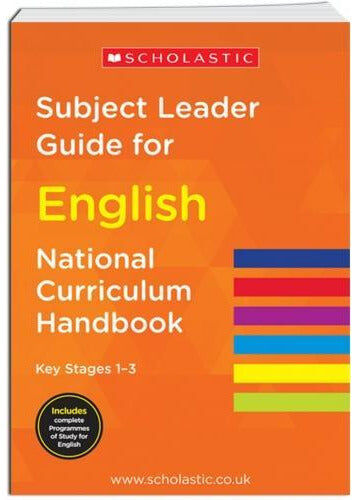
Scholastic National Curriculum Handbook Subject Leader Guide For English Key Stage 1-3National Curriculum Handbook Subject Leader Guide for English Key Stage 1-3 Description: Get ready for the biggest curriculum change in more than a decade! To help coordinators to deliver the new curriculum; Scholastic has published the first complete printed programme of study for key stages 1-3 in English. Each guide also provides a wealth of subject leader support including: an overview of the main changes to the curriculum; an overview of the subject leader's role at times of curriculum change; priority areas at each key stage; how to add creativity to the new curriculum; helpful subject leader's check-list. Scholastic; publisher of the best-selling 100 Lessons series; has partnered with Babcock Learning and Development Partnership (Devon Local Authority); one of the UK's leading school improvement services; to develop these essential subject guides.9,99 £*Shipping: 2,99 £Secure redirect to the provider
-
Arcturus A Degree in a Book: Psychology by Alan Porter Everything You Need to Know to Master the Subject - in One Book!A perfect introduction for students and laypeople alike, A Degree in a Book: Psychology provides you with all the concepts you need to understand the fundamental issues. Filled with helpful diagrams, suggestions for further reading, and easily digestible features on the history of psychology, this book makes understanding the human mind easier than ever. Including the theories of Francis Galton, Sigmund Freud, Ivan Pavlov, and many more, it covers the whole range of psychological research. By the time you finish reading this book, you will be able to answer questions such as: How do we learn? Do groups make better decisions than individuals? How do we study the living brain? What are the components of personality?8,95 £*Shipping: 2,99 £Secure redirect to the provider
-
What questions are there about subject-verb agreement?
Some common questions about subject-verb agreement include: 1. How do I know which form of the verb to use with a singular or plural subject? 2. What about collective nouns or indefinite pronouns - do they take a singular or plural verb? 3. How do I handle compound subjects, where there are multiple nouns or pronouns joined by "and" or "or"? 4. Are there any exceptions or irregularities to the standard rules of subject-verb agreement? 5. What are some common mistakes to watch out for when it comes to subject-verb agreement? **
-
What is the difference between Subject-Verb-Object (SVO) and Subject-Subject-Verb (SSV) sentences?
The main difference between Subject-Verb-Object (SVO) and Subject-Subject-Verb (SSV) sentences lies in the order of the elements. In SVO sentences, the subject comes first, followed by the verb, and then the object. In SSV sentences, there are two subjects followed by the verb. This difference in structure can impact the emphasis and clarity of the sentence, as well as the overall flow of information. **
-
Is "leben" a subject or a verb?
"Leben" is a verb in German. It means "to live" in English. It is used to describe the action of being alive or residing in a particular place. **
-
What is the order of subject, verb, and object in Latin?
In Latin, the typical word order is Subject-Object-Verb (SOV). This means that the subject of the sentence comes first, followed by the object, and then the verb. For example, "puella rosam amat" translates to "the girl loves the rose," where "puella" is the subject, "rosam" is the object, and "amat" is the verb. However, Latin is a highly inflected language, so word order can be flexible and the meaning of the sentence is often determined by the case and ending of the words rather than their position in the sentence. **
Similar search terms for Subject-Verb Agreement
-
Aster The Unexpected Joy of Being Single: Locating unattached happiness by Catherine GrayHaving a secret single freak-out? Feeling the red, heart-shaped urgency intensify as the years roll on by? Oh hi! You're in the right place. Over half of Brits aged 25-44 are now single. It's become the norm to remain solo until much later in life, given the average marriage ages of 35 (women) and 38 (men). Many of us are choosing never to marry at all.But society, films, song lyrics and our parents are adamant that a happy ending has to be couple-shaped. That we're incomplete without an 'other half'*, like a bisected panto pony. Cue: single sorrow. Dating like it's a job. Spending half our lives waiting for somebody-we-fancy to text us back. Feeling haunted by the terms 'spinster' or 'confirmed bachelor.' Catherine Gray took a whole year off dating to find single satisfaction. She lifted the lid on the reasons behind the global single revolution, explored the bizarre ways cultures single-shame, detached from 'all the good ones are gone!' panic and debunked the myth that married people are much happier. Let's start the reverse brainwash, in order to locate - and luxuriate in - single happiness. Are you in?1,99 £*Shipping: 1,99 £Secure redirect to the provider
-
Youfap Market Educational Toy, Save The Penguin Ice Tapping Rescue Game, Fun Family Game For Parent Child Bonding Educational Toy, Save The Penguin Ice Tapping Rescue Game, Fun Family Game For Parent Child BondingEngage and Bond with the Save The Penguin Ice Tapping Rescue Game Looking for a fun and educational way to bond with your kids The Save The Penguin Ice Tapping Rescue Game is a perfect choice for quality parentchild bonding time. This interactive...49,97 $*Shipping: 0,00 $Secure redirect to the provider
-
Hardie Grant Books The Spanish Home Kitchen by José Pizarro - Hardback Spanish Cookbook - 80+ Seasonal Recipes & Family Memories - Foodie GiftThe Spanish Home Kitchen by José Pizarro is a cookbook that gathers over 80 seasonal recipes from his family farm in Talaván and from all corners of Spain. This hardback edition combines evocative storytelling with achievable, authentic cooking, making it a valuable addition to any kitchen bookshelf. It's a book for cooks who want real Spanish flavor without the fuss, and for anyone who loves food with heart and history behind it. Chef José Pizarro grew up on a farming family's land in central-western Spain, where meals were built around whatever the season, the garden, and the farmyard provided. In The Spanish Home Kitchen, he returns to that childhood home to retell the recipes passed from his grandmother, to his mother, and eventually to him.19,99 £*Shipping: 2,99 £Secure redirect to the provider
-
How is the agreement of the past participle with the auxiliary verb avoir done?
In French, the past participle agrees with the direct object when the auxiliary verb is avoir. However, this agreement only occurs when the direct object comes before the verb. If the direct object comes after the verb, there is no agreement. For example, in the sentence "J'ai mangé la pomme" (I ate the apple), the past participle "mangé" agrees with the direct object "la pomme" because it comes before the verb. But in the sentence "J'ai mangé une pomme" (I ate an apple), there is no agreement because the direct object "une pomme" comes after the verb. **
-
What is the school subject Happiness?
Happiness is not typically considered a traditional school subject like math or science. However, some schools have started incorporating classes or programs focused on well-being, mindfulness, and emotional intelligence to help students develop skills for managing stress, building resilience, and fostering positive relationships. These programs aim to promote mental health and overall happiness among students, recognizing the importance of emotional well-being in academic success and personal growth. **
-
What is an auxiliary verb and a main verb?
An auxiliary verb, also known as a helping verb, is a verb that is used with a main verb to form a verb phrase. It helps to express the tense, mood, or voice of the main verb. Common auxiliary verbs include "be," "have," and "do." A main verb, also known as a lexical verb, is the primary verb in a sentence that carries the main meaning or action. It is the verb that is not preceded by an auxiliary verb in a verb phrase. Main verbs can express actions, states of being, or occurrences. **
-
Before the verb.
'Before the verb' refers to the placement of adverbs in a sentence. Adverbs are words that modify verbs, adjectives, or other adverbs. When an adverb is placed before the verb in a sentence, it typically provides information about how the action is being performed. For example, in the sentence "She quickly ran to the store," the adverb "quickly" is placed before the verb "ran" to describe how she performed the action of running. **
* All prices are inclusive of VAT and, if applicable, plus shipping costs. The offer information is based on the details provided by the respective shop and is updated through automated processes. Real-time updates do not occur, so deviations can occur in individual cases. ** Note: Parts of this content were created by AI.